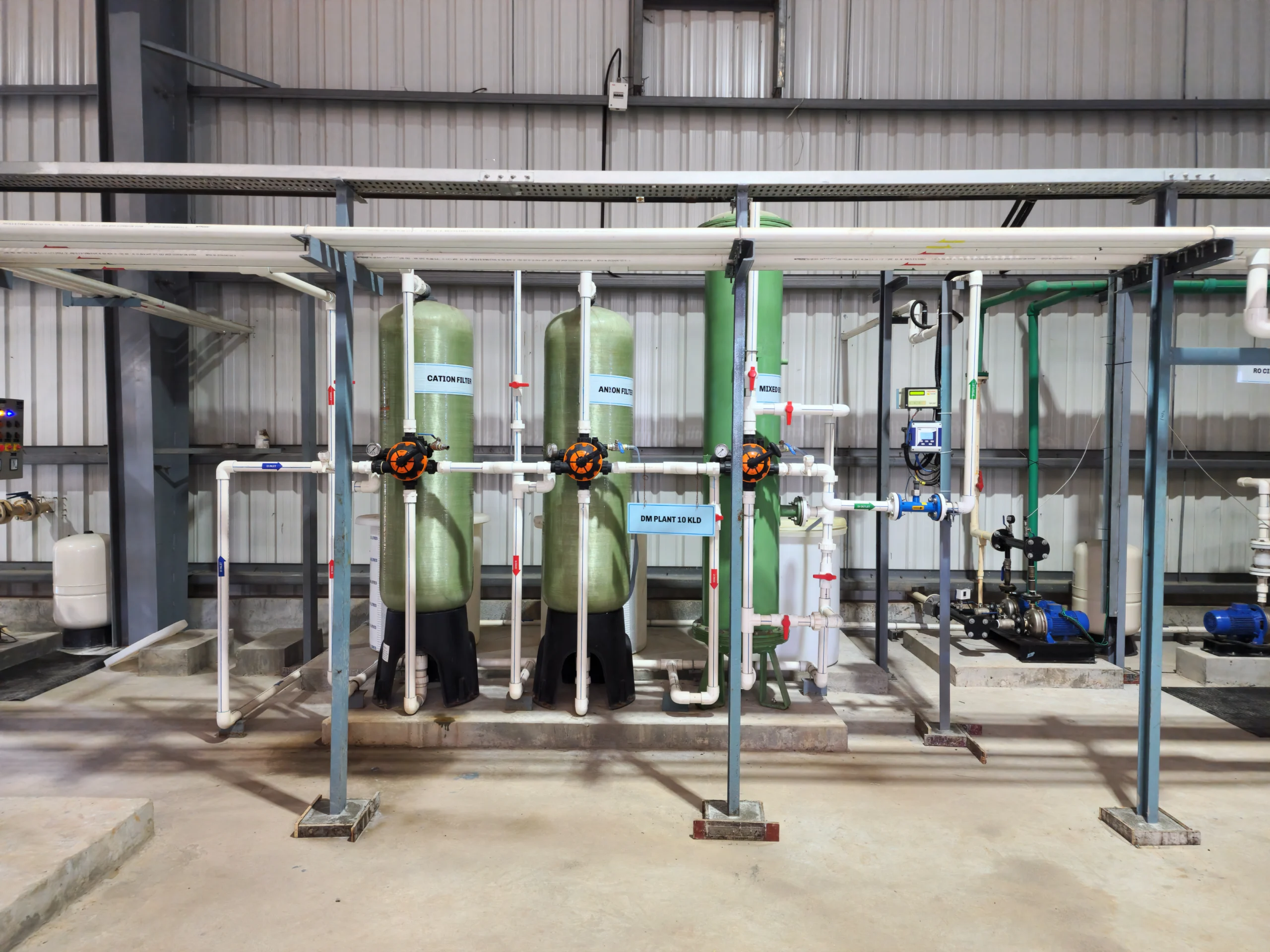
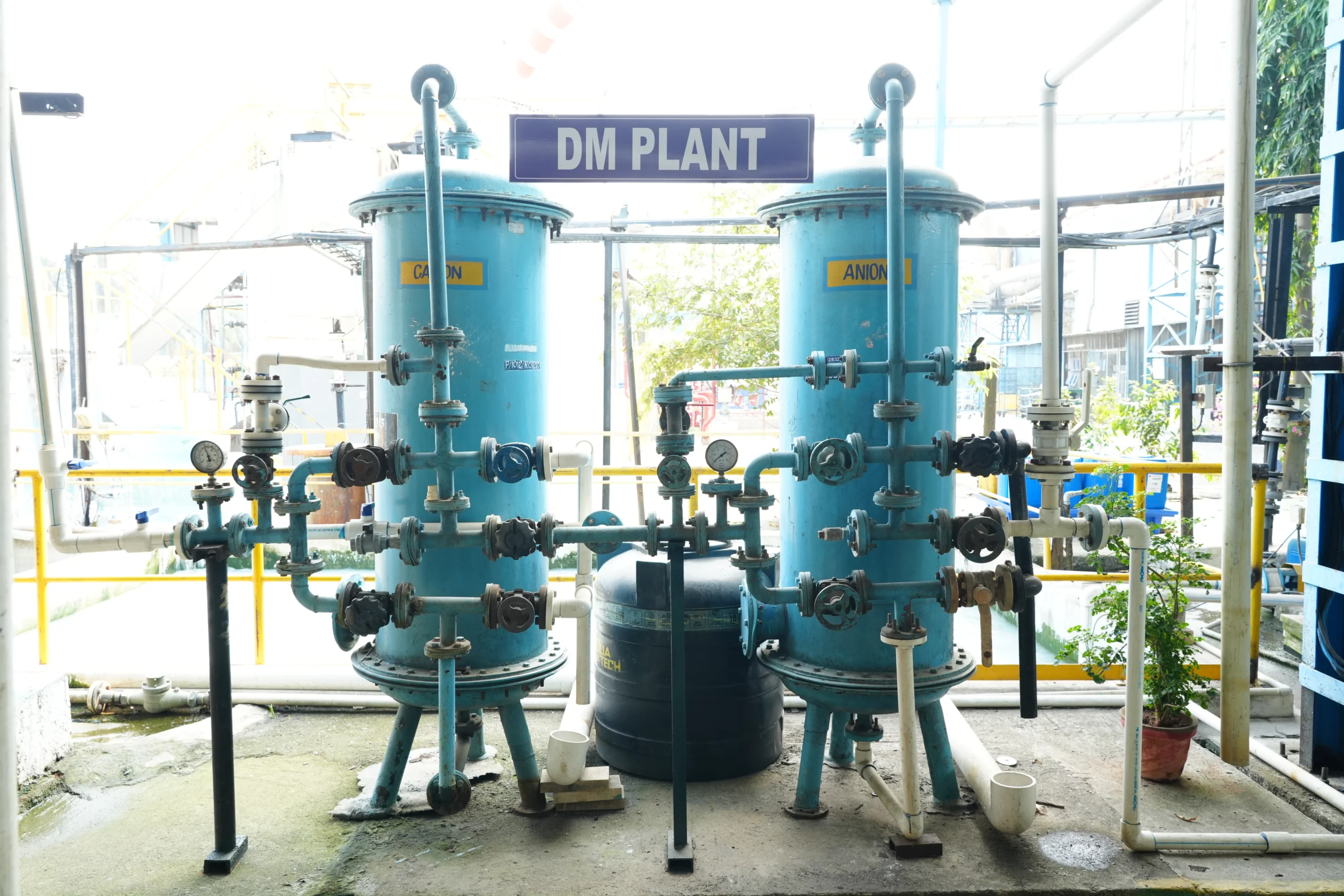
DM Plant (Demineralization Plant)
Essential for boiler feed water preparation in power plants, pharmaceuticals, electronics manufacturing, chemical processing, and anywhere ultra-pure process water is required.
Unique Features
Produces high-purity demineralized water by removing dissolved salts and minerals
Uses strong acid cation (SAC) and strong base anion (SBA) ion exchange resins
Multiple configurations: two-bed, mixed-bed, or multi-bed systems
Achieves conductivity as low as <1 µS/cm and silica levels <0.02 ppm
Regenerable resins ensure long operational life
Available in manual, semi-automatic, and fully automated variants
Frequently Asked Questions
A two-bed DM plant has separate cation and anion exchangers in series and achieves conductivity of 1–5 µS/cm. A mixed-bed plant has both resins mixed in one vessel and produces higher-purity water (conductivity <0.1 µS/cm), often used as a polishing step.
Regeneration frequency depends on feed water TDS and water consumption. Typically, regeneration is required after every 50,000–200,000 liters treated. Automatic DM plants trigger regeneration based on conductivity breakthrough alarms.
Cation resin is regenerated with hydrochloric acid (HCl) or sulphuric acid (H2SO4), while anion resin is regenerated with sodium hydroxide (NaOH). After regeneration, the resins are rinsed with DM water before returning to service.
Standard DM plants are cost-effective for feed water TDS up to ~500 mg/L. For higher TDS, a reverse osmosis (RO) system is recommended as a pre-treatment stage to reduce resin load and chemical consumption during regeneration.