Our Products
- Water Softener Systems
- Ultrafiltration (UF) Systems
- Reverse Osmosis (RO) Plant
- Organic Waste Converters (OWC)
- DAF (Dissolved Air Flotation)
- Screw Press
- FEDI (Flow Equalization & Distribution Inlet)
- Oil Skimmer
- DM Plant (Demineralization Plant)
- Polishing RO (Reverse Osmosis)
- Dialysis RO (Haemodialysis-Grade RO)
- Dechant Mechanism (Decanting System)
- Automated Bar Screen
Polishing RO (Reverse Osmosis)
Used as a final water purification step in pharmaceutical manufacturing, hospital dialysis units, semiconductor and electronics industries, cosmetics, and food & beverage sectors.
Unique Features
Final polishing step to achieve pharmaceutical or ultrapure water quality
Removes residual dissolved solids, organics, endotoxins, and micropollutants
Achieves permeate TDS <5 ppm and conductivity <10 µS/cm
High-rejection spiral wound membranes (>99% salt rejection)
Typically operates at low pressures as feed is already pre-treated
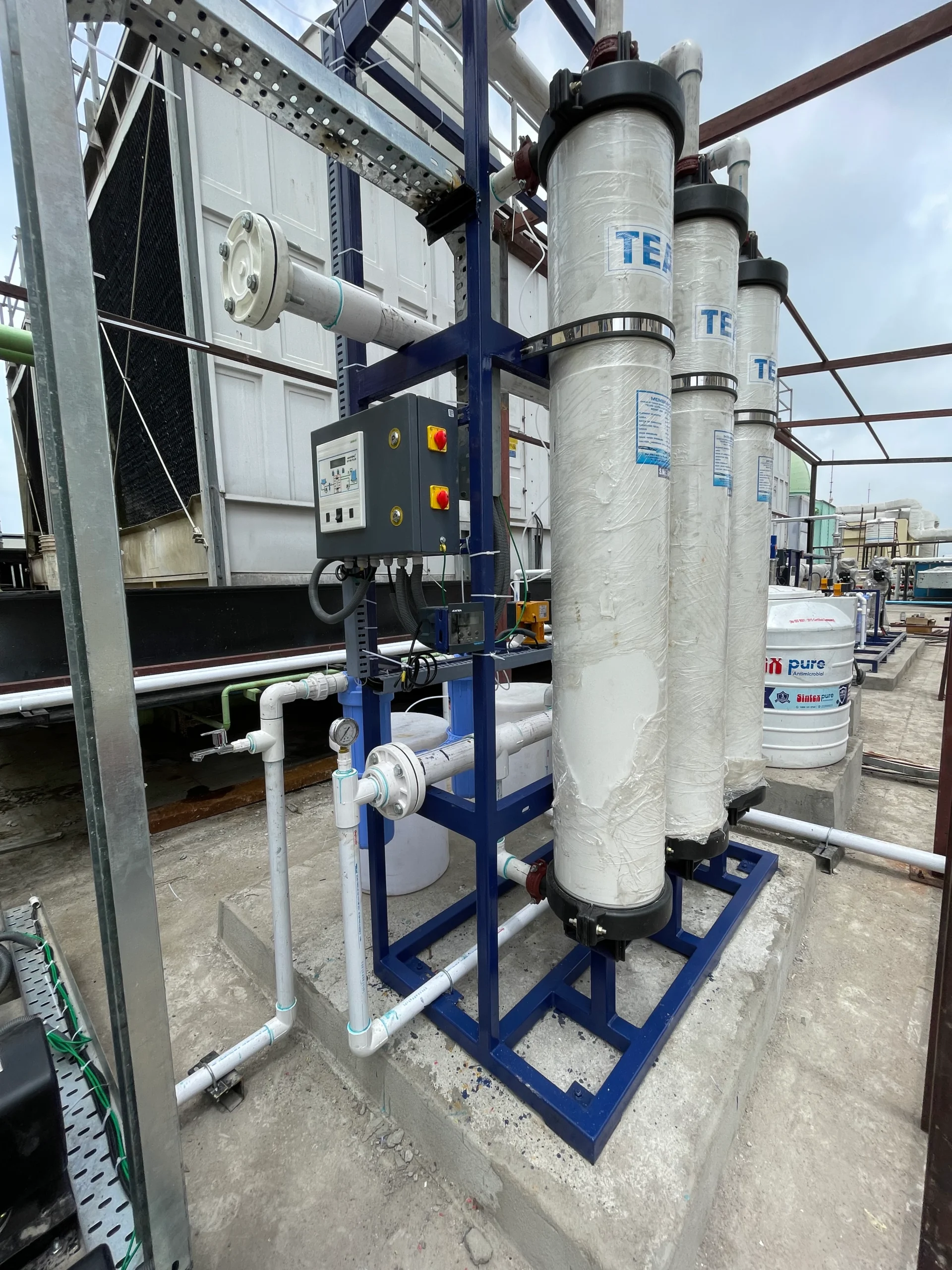
Compact skid-mounted design for easy integration into existing systems
Frequently asked questions
A polishing RO is designed to treat pre-treated water (from a primary RO or DM plant) rather than raw water. It operates at lower pressures, uses high-rejection membranes, and is optimized to remove trace contaminants for ultrapure water production.
Polishing RO systems typically achieve recovery rates of 75–85% since the feed water is already of good quality with low TDS and fouling potential, making operation highly efficient compared to first-pass RO systems.
With proper pre-treatment and regular CIP (Clean-In-Place) procedures, polishing RO membranes can last 3–5 years. Replacement frequency depends on fouling index of the feed water and cleaning protocol adherence.
Yes, in most pharmaceutical applications, a polishing RO is a regulatory requirement (as per USP, WHO GMP, and IP standards) to ensure water for injection (WFI) or purified water meets conductivity, TOC, and endotoxin specifications.